At Optimus Injury Treatment Center, every patient who walks through our door has been hurt in an accident, injured on the job, or affected by a traumatic event. That is the entirety of what we do. No maintenance care. No general wellness. No commercial patients. Our practice exists at the intersection of serious injury and the advocacy that follows it — and we have built every clinical system around that single purpose.
We are a personal injury chiropractic and functional rehabilitation practice serving patients across Delaware and southeastern Pennsylvania, with our primary clinic in Dover, DE and satellite locations extending our reach statewide.
The Most Common Car Accident Injury Is Also the Hardest to Prove
What Soft Tissue Injury Actually Does to Your Body
When a collision forces your body beyond its normal range of motion (even at low speeds) the muscles, ligaments, and fascia absorb that force. At the tissue level, this means micro-tears in muscle fibers, overstretching or partial rupture of ligaments, and disruption of the fascial sheaths that hold your cervical and lumbar structures in place. The result is inflammation, restricted movement, and pain that often intensifies in the days following the accident, not immediately after.
Ligament damage is particularly significant. Unlike muscle, ligamentous tissue has limited blood supply and heals slowly. Untreated ligament strain at the cervical or lumbar level can produce instability that becomes a chronic, progressive problem, not a temporary inconvenience.
The clinical term for the broader pattern (muscle and ligament injury after a car accident affecting the neck and upper back) is cervical or lumbar sprain/strain with myofascial involvement. That is a real diagnosis with real, measurable findings. Getting those findings documented properly is the difference between a supported claim and a dismissed one.
Why "Your MRI Was Negative" Is Not the End of the Conversation
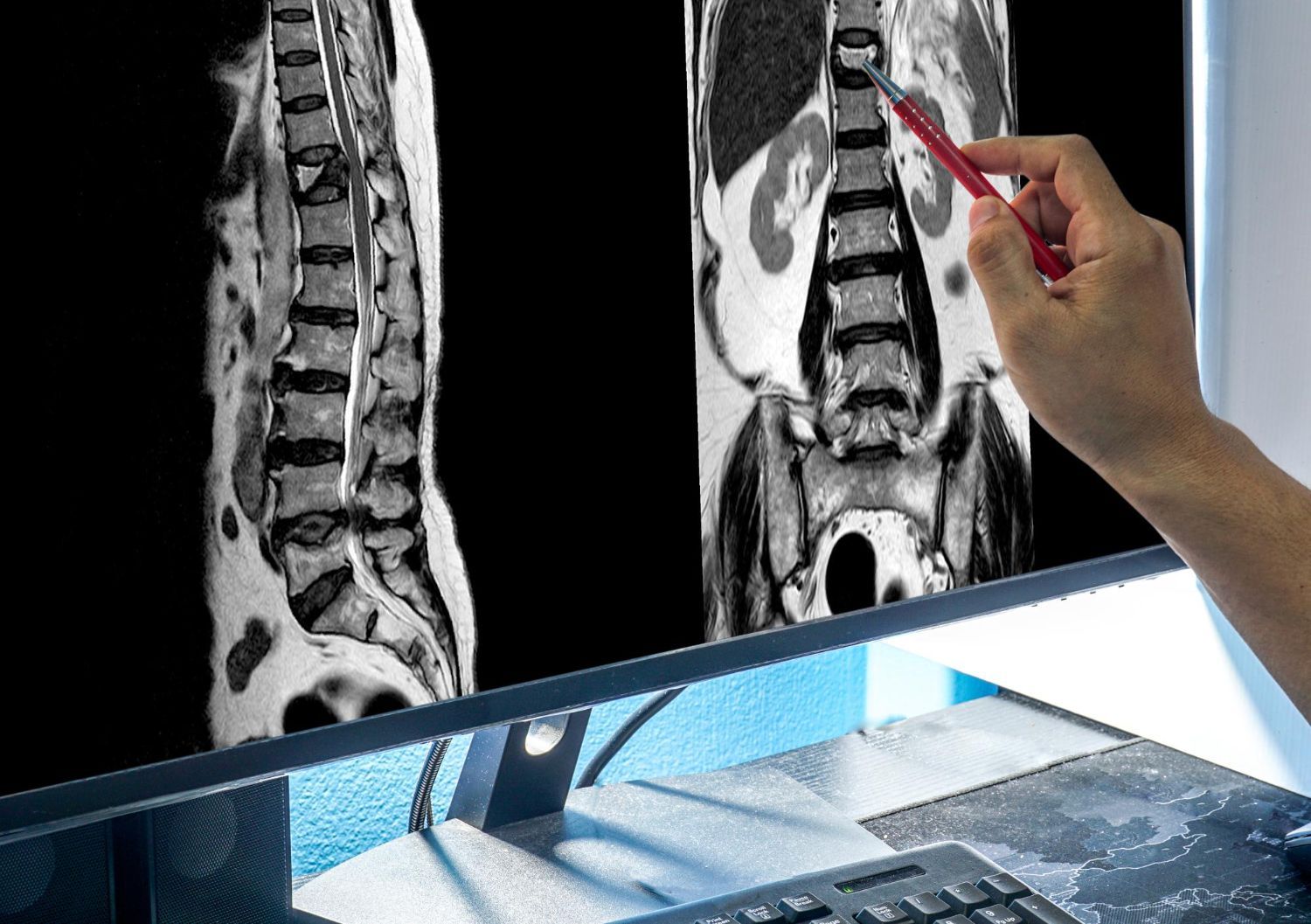
Standard MRI and X-ray are designed to detect structural pathology: fractures, disc herniation, gross ligamentous rupture. They are not designed to detect myofascial injury, early-stage ligament strain, or the biomechanical compensation patterns that develop after soft tissue damage. A negative scan means the scan didn't find what it wasn't looking for.
Functional biomechanical assessment tells a different story. At Optimus, our initial evaluation includes:
- Range of motion measurement with objective instrumentation
- Muscle strength and symmetry testing
- Postural and spinal alignment analysis
- Palpatory examination of soft tissue integrity across affected regions
- Neurological screening to identify any upper cervical involvement
These findings are documented in clinical reports structured specifically for personal injury litigation. They answer the question insurers and defense attorneys ask: where is the objective evidence? We find and document what scans can't see.
How We Treat Soft Tissue Damage Chiropractic Care Can't Address Alone
Effective soft tissue injury treatment after a car accident requires more than spinal adjustment. The tissue itself (the muscle, the fascia, the ligament) must be directly addressed to restore function and prevent chronic pain from taking hold. At Optimus, treatment is individualized based on evaluation findings and may include:
- Chiropractic manipulation: Restores proper joint mechanics and reduces the compensatory muscle guarding that develops around injured tissue.
- Myofascial release: Targeted manual therapy applied directly to restricted fascial planes and trigger points, addressing the structural source of pain rather than the symptom.
- Dry needling: Fine filiform needles placed into hyperirritable muscle tissue to release trigger points and promote tissue repair at the site of injury.
- Therapeutic ultrasound: Deep tissue stimulation that accelerates cellular repair and reduces inflammation in injured muscle and ligament.
- Electrical stimulation (e-stim): Reduces acute pain, decreases muscle spasm, and supports the early phases of tissue healing.
Every treatment plan at Optimus is built around objective evaluation findings, not a generic protocol. A real diagnosis. A real plan. From the first visit.
Upper Cervical Soft Tissue Injury and TBI: Why We Screen Every Patient
Soft tissue injury at the upper cervical spine (the C1 and C2 vertebral level) frequently co-occurs with functional traumatic brain injury. The same forces that strain the muscles and ligaments of the neck can transmit through the cranio-cervical junction and affect neurological function. Many patients with this pattern are discharged from the ER with a soft tissue diagnosis and no TBI evaluation.
At Optimus, every initial evaluation includes neurological screening for signs of TBI, regardless of whether the patient was told to expect one. If findings suggest neurological involvement, we have the clinical infrastructure to address it: including on-staff neuropsychological evaluation through Dr. Anthony Doran, Psy.D., and adaptive contrast oxygen therapy for TBI.
You do not need a separate referral to access that level of care. It is part of the same evaluation process.
Treat the Injury Now or Manage the Consequences Later
Soft tissue injuries that go untreated, or that receive only short-term symptom management, frequently progress into chronic pain syndromes. Scar tissue forms at the site of unresolved muscle and ligament damage, reducing range of motion and creating persistent pain patterns that become harder to treat with each passing month. Early, targeted intervention is not just better for your recovery: it is better for your claim.
The longer the gap between your accident and proper treatment, the more difficult it becomes to establish causation in a legal context. Insurers and defense attorneys use treatment gaps as evidence that the injury was not serious. Consistent, documented care from a credentialed provider closes that argument before it opens.
Frequently Asked Questions About Soft Tissue Injury After a Car Accident
How do you treat soft tissue injury from a car accident?
Treatment depends on the specific tissues injured and the severity of damage found on evaluation. At Optimus, we use a combination of chiropractic manipulation, myofascial release, dry needling, therapeutic ultrasound, and electrical stimulation: applied in a sequence based on your individual findings. The goal is to restore tissue integrity, reduce inflammation, and prevent chronic pain from developing.Can soft tissue damage be documented for a personal injury claim if my MRI was negative?
Yes. Soft tissue injury does not appear on standard MRI or X-ray. Functional biomechanical assessment (including range of motion testing, muscle strength measurement, and clinical examination) produces objective findings that are fully documentable and defensible in litigation. Our reports are structured specifically for personal injury use.How long does soft tissue injury take to heal after a car accident?
Recovery depends on the severity of the injury, the tissues involved, and how quickly treatment begins. Mild muscle strain may resolve in a few weeks with consistent care. Ligament injuries, particularly at the cervical spine, can take several months and require ongoing monitoring. Early treatment significantly improves outcomes and reduces the risk of chronic pain.What is myofascial injury and how is it different from a regular muscle strain?
Myofascial injury involves damage to both the muscle tissue and the fascia; the connective tissue sheath surrounding it. A standard muscle strain affects the muscle fibers themselves. Myofascial injury disrupts the fascial system, which can create widespread pain patterns that extend well beyond the original injury site. It requires targeted manual therapy and, in many cases, dry needling to resolve effectively. Do I need a referral from my doctor to be seen at Optimus? No referral is required. If you were injured in a motor vehicle accident or on the job, you can contact us directly to schedule an evaluation. We work with personal injury attorneys throughout Delaware and southeastern Pennsylvania and can coordinate with your legal team from the start of care.
Ready to Start Your Recovery?
Most patients can be seen within 24–48 hours of their first call. The sooner your injuries are evaluated and documented, the stronger your path forward — medically and legally.