Quick Summary: A low-impact crash can leave a vehicle with limited visible damage while still placing meaningful force on the body. Neck, back, shoulder, nerve, and cognitive symptoms may not be obvious at the scene or during an initial emergency evaluation. At Optimus Injury Treatment Center, we focus exclusively on identifying, treating, and objectively documenting post-traumatic injuries so patients can pursue an informed recovery plan and attorneys can receive clear clinical reporting.
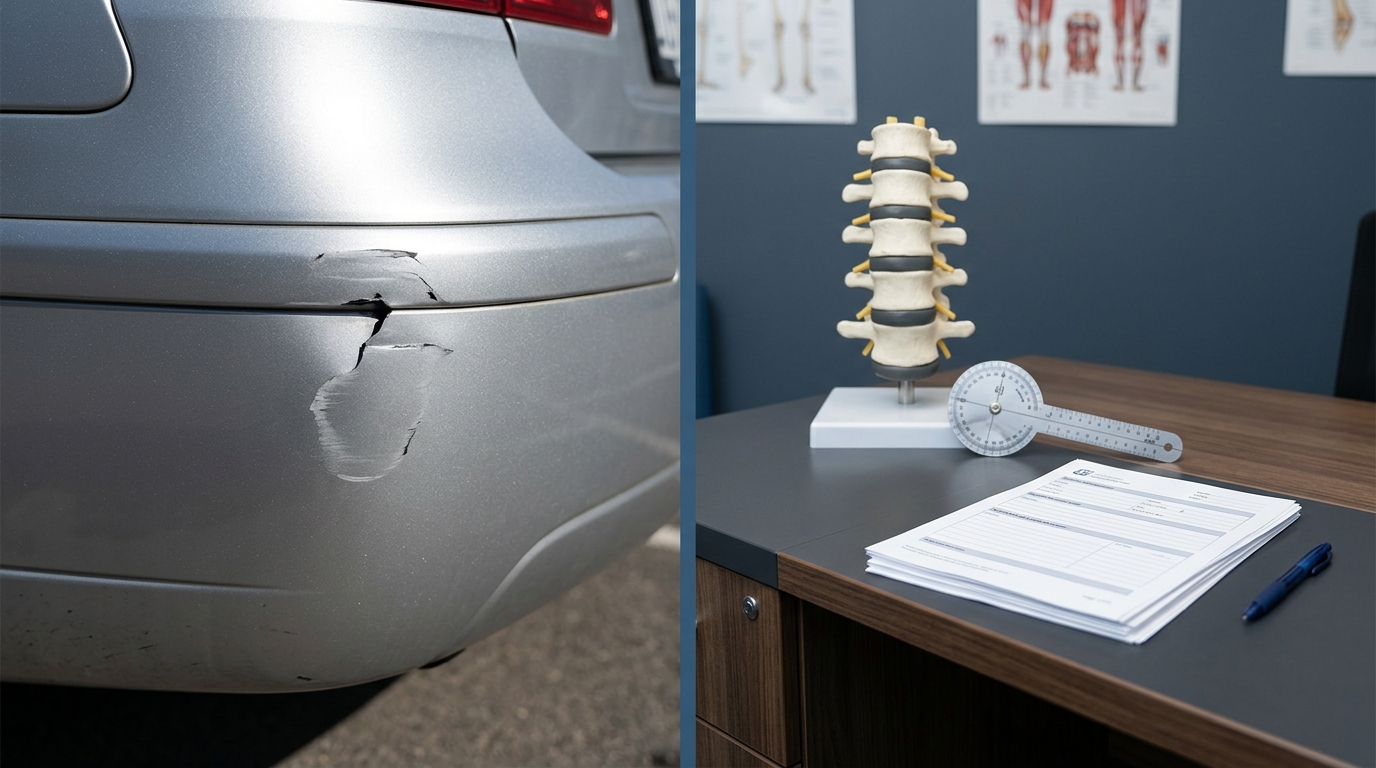
- Minor vehicle damage does not reliably show whether a person sustained a soft-tissue or neurological injury.
- Symptoms such as headaches, stiffness, numbness, poor sleep, and mental fog can develop or worsen after the first day.
- Whiplash and other soft-tissue injuries may affect movement, work, driving, and daily routines.
- A detailed follow-up assessment can help identify functional changes that were not apparent in the emergency room.
- Objective examinations and consistent progress documentation help create a clearer clinical record over time.
When a “Minor” Crash Does Not Feel Minor
It is common to look at a car after a low-speed collision and assume that little damage to the vehicle means little risk to the people inside. But a car is designed to absorb and distribute energy. The human body responds differently. Even in a crash that appears minor, the head, neck, torso, and shoulders may move abruptly before the muscles have time to stabilize them.
That movement can strain muscles and ligaments, irritate joints, stress discs, and affect nerves. It can also produce symptoms that are easy to dismiss at first, particularly when adrenaline, stress, and the urgency of the moment make it difficult to notice subtle changes.
At Optimus Injury Treatment Center in Dover, Delaware, we regularly see people who were discharged from an emergency department because they did not have an immediately obvious emergency, yet they continued to feel different in the hours or days that followed. An ER visit is important when emergency care is needed. It is not, however, the same as a comprehensive follow-up evaluation for post-traumatic soft-tissue, functional, and neurological concerns.
How Soft-Tissue Injuries Can Occur in Low-Impact Collisions
Soft tissue includes muscles, tendons, ligaments, fascia, and other structures that support movement and stability. In a rear-end, side-impact, or sudden-stop collision, these tissues can be stretched, compressed, or forced to contract rapidly. The result may be inflammation, guarding, altered movement patterns, and pain that becomes more noticeable once the initial stress response has faded.
The neck is especially vulnerable because it supports the weight of the head while allowing a broad range of motion. During a rapid acceleration-deceleration event, the neck may move beyond its normal comfortable range. This mechanism is commonly associated with whiplash, but symptoms can extend well beyond neck soreness.
A person may also experience low back pain after a car accident, shoulder pain from bracing against the steering wheel or seatbelt, or pain between the shoulder blades. Reduced motion can make ordinary activities such as checking blind spots, lifting groceries, sitting at a desk, or sleeping comfortably more difficult.
Our auto accident injury care
begins with attention to the mechanism of the crash, the symptoms that followed, and the ways those symptoms are affecting daily function. This helps us build care around the individual rather than around assumptions based on visible vehicle damage.
Why Symptoms May Be Delayed
Delayed symptoms are not unusual after trauma. Immediately after a collision, the body may release stress hormones that temporarily change how pain is perceived. A person may focus on exchanging information, arranging transportation, or getting home safely rather than assessing every physical sensation.
As the day progresses, inflammation and muscle guarding can become more noticeable. The next morning, stiffness may make it difficult to turn the head. Over the next several days, headaches, disrupted sleep, low back discomfort, shoulder pain, tingling, or reduced concentration may become more apparent.
It is important to pay attention to changes, even if they seem mild. Keep a simple record of when symptoms began, what makes them worse or better, whether they interrupt sleep, and how they affect work and home responsibilities. If symptoms are severe, worsening, or accompanied by emergency warning signs, seek urgent medical care. For follow-up care after a crash, we encourage patients to contact Optimus Injury Treatment Center promptly so we can evaluate the full clinical picture.
Whiplash Is More Than a Stiff Neck
Whiplash can involve pain, stiffness, reduced cervical motion, muscle tenderness, and sensitivity around the neck and upper back. It may also contribute to headaches, shoulder discomfort, dizziness, fatigue, and difficulty finding a comfortable sleeping position. Every person’s presentation is different, which is why a careful examination matters.
We assess how the neck moves, how symptoms respond to movement, whether surrounding areas are compensating, and whether neurological symptoms are present. Numbness, tingling, burning sensations, or weakness can be important findings to report because they may indicate nerve involvement that requires further evaluation.
For patients seeking whiplash and neck-injury care in Dover and throughout Delaware, our approach may include hands-on chiropractic care, progressive rehabilitative exercises, and therapies selected to match the patient’s findings and tolerance. Learn more about our functional rehabilitation approach
and how it supports a return to safer, more comfortable movement.
Headaches, Brain Fog, and Other Post-Traumatic Changes
Not every post-crash symptom is limited to the neck or back. Some people report headaches, light or noise sensitivity, dizziness, difficulty concentrating, slowed thinking, irritability, unusual fatigue, or changes in sleep. These symptoms deserve thoughtful attention, particularly when they start after a collision or interfere with normal routines.
A person does not need to strike their head to experience symptoms that warrant a concussion or traumatic brain injury evaluation. Rapid movement of the head can be significant, and a careful history can help guide appropriate next steps. At Optimus Injury Treatment Center, we take a functional, patient-centered approach to post-traumatic concerns and coordinate care or referral when a patient’s presentation calls for it.
Our clinical team considers how physical discomfort, poor sleep, stress, and possible neurological changes may overlap. We do not make assumptions based on a single symptom. Instead, we document reported concerns, objective examination findings, functional limitations, and progress over time.
A Practical Timeline After a Low-Impact Crash
First hours:
Prioritize safety and seek emergency medical attention when needed. Note any immediate pain, dizziness, headache, confusion, numbness, weakness, or changes in vision. Even when symptoms are limited, write down what you notice and preserve basic crash information.
First 24 to 72 hours:
Monitor for stiffness, headaches, shoulder or back pain, sleep disruption, tingling, reduced range of motion, and cognitive changes. Avoid pushing through symptoms just to resume normal activity. Arrange follow-up care if symptoms develop or persist.
First week:
A comprehensive injury evaluation can establish a clinical baseline. At Optimus Injury Treatment Center, we review the crash mechanism, examine affected areas, identify functional limitations, and develop a care plan appropriate to the patient’s condition.
Following weeks:
Care may progress from symptom management to restoring movement, strength, coordination, and confidence with everyday tasks. Our advanced therapies
may be incorporated when clinically appropriate, alongside individualized rehabilitation and ongoing reassessment.
Ongoing recovery:
Recovery is not always linear. Changes in pain, sleep, work tolerance, headaches, or activity capacity should be shared with the care team. Regular documentation allows us to update care based on measurable findings and the patient’s lived experience.
Why Objective Documentation Matters
Patients deserve to understand what is happening in their bodies and how their condition is changing. Objective documentation helps make that possible. It can include injury history, examination findings, range-of-motion measures, functional limitations, neurological observations, treatment response, and reassessments at meaningful points during care.
For patients, thorough records support continuity of care and provide a clearer picture when other providers become involved. For attorneys, well-organized clinical reporting can help clarify the mechanism of injury, the course of treatment, objective findings, and functional impact. It is medical documentation, not legal advice, and it should accurately reflect the patient’s presentation and care.
Optimus Injury Treatment Center works with referral attorneys across Delaware and nearby communities with timely communication and detailed reporting. Visit our resources for attorneys
to learn how our referral process and documentation approach can support a coordinated patient-care experience.
Care Designed Around the Person, Not the Property Damage
Our practice specializes exclusively in finding, treating, and documenting post-traumatic injuries. That focus matters when a person has been told that the crash was minor but continues to experience pain, restricted movement, headaches, sleep issues, numbness, or cognitive symptoms.
We use one-on-one care to understand the patient’s concerns, evaluate relevant physical and functional findings, and create a treatment plan that can evolve with recovery. Depending on the presentation, care may include chiropractic realignment, rehabilitation, dry needling, acupuncture, or other advanced approaches. We consider each service in the context of the patient’s examination and goals.
If you are looking for post-accident follow-up care in Dover, our team is ready to help you take the next appropriate step. Explore our Dover location
information or call Optimus Injury Treatment Center at (302) 688-5200 to schedule an evaluation.
When to Reach Out
Patients should contact us when symptoms appear after a collision, when an ER discharge does not explain ongoing discomfort, or when pain and functional changes are interfering with daily life. You do not need to wait for symptoms to become overwhelming before asking for a thorough follow-up assessment.
Referral attorneys can contact Optimus Injury Treatment Center when a client needs trauma-focused evaluation, rehabilitative care, and clinically grounded documentation. Our team values clear communication, prompt coordination, and records that accurately reflect the patient’s course of care.
Whether you are a patient seeking answers or an attorney seeking a trusted clinical referral partner, start with the Optimus Injury Treatment Center homepage
or call our Dover office at (302) 688-5200.
FAQ
Can a low-speed car accident cause an injury?
Yes. Visible vehicle damage does not determine how the body responded to the collision. Sudden forces can affect muscles, ligaments, joints, nerves, and normal movement patterns, even when the car appears to have limited damage.
Why do I feel worse days after my car accident?
Adrenaline and the immediate demands of the situation can mask symptoms at first. Inflammation, muscle guarding, and disrupted sleep may make stiffness, headaches, pain, or fatigue more noticeable over the following days.
Why did the ER say I was fine but I still feel off?
Emergency care is designed to identify and address urgent or life-threatening problems. A normal ER discharge does not necessarily rule out soft-tissue injury, movement restrictions, or functional symptoms that require follow-up assessment.
What are common signs of whiplash?
Common concerns include neck pain or stiffness, reduced range of motion, headaches, upper-back or shoulder pain, sleep disruption, and symptoms that increase with driving, desk work, or turning the head.
Can a car accident cause numbness or tingling?
It can. Numbness, tingling, burning, or weakness may be associated with nerve irritation or other conditions that need clinical evaluation. Tell a healthcare professional about these symptoms promptly, especially if they are worsening or accompanied by significant weakness.
Can I have concussion-like symptoms without hitting my head?
Symptoms such as headache, dizziness, cognitive changes, fatigue, and sensitivity to light or noise may warrant evaluation after the head and body move rapidly in a collision. An assessment can help determine appropriate care and whether referral is needed.
What happens during an auto accident follow-up evaluation?
We discuss the crash, the onset and pattern of symptoms, health history, and daily limitations. We then perform an examination focused on relevant movement, physical, functional, and neurological findings before discussing an individualized plan.
What does functional rehabilitation involve?
Functional rehabilitation focuses on helping patients restore movement, strength, coordination, tolerance for everyday activity, and confidence in tasks affected by injury. The plan should progress according to the patient’s findings and response to care.
How can an attorney refer a client to Optimus Injury Treatment Center?
Attorneys may contact our Dover office at (302) 688-5200 or use our attorney referral resources. We can help coordinate an evaluation, maintain clear communication within appropriate privacy boundaries, and provide detailed clinical documentation.
Do you offer screenings for possible post-traumatic brain injury concerns?
Optimus Injury Treatment Center offers community TBI screenings and can discuss whether a post-traumatic evaluation is appropriate for your situation. Contact our office to ask about current screening availability and next steps.